
Last updated October 30, 2026
 House lockouts
 Re-keying
 Deadbolt upgrades
 Smart locks
 Schlage
 Kwikset
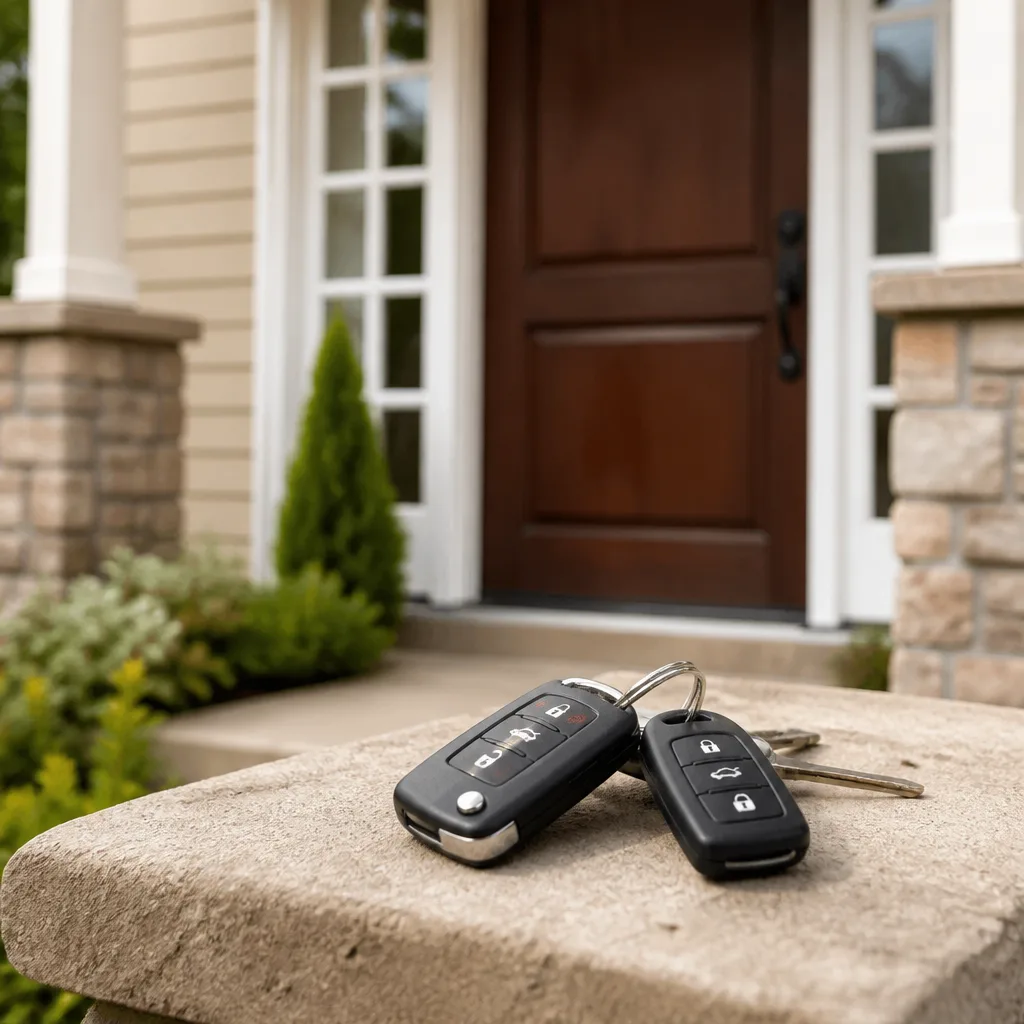 Car keys & fobs
Non-destructive entry first, always - and we re-key Schlage, Kwikset, and Baldwin locks on the spot while you watch
You get a price before we start. It does not change when we arrive. No surprises.
Get your free estimateCar Key Replacement Troubleshooting: Common Problems and How to Fix Them
Here’s a stat that surprises most drivers: roughly half of the car key replacement calls we handle in Washington, D.C. involve a key that doesn’t actually need replacing. The key itself is fine. What’s failed is something around it – a coin battery, a steering column lock, a blown fuse that powers the immobilizer antenna, or a fob that simply lost sync with the vehicle’s computer. This guide walks through the most common car key failures we see, the tests you can run in your driveway, and the line where troubleshooting becomes a professional job. For a deeper dive on when replacement is truly necessary, see The Complete Car Key Replacement Guide for Washington, D.C. Homeowners. You’ll learn how to separate a five-minute fix from a real replacement, and how to avoid mistakes that can make a minor fault worse.
Quick Answer
Car key replacement troubleshooting starts with identifying which part of the system failed: the blade, the battery, the transponder chip, the fob remote, or the vehicle’s receiver. A dead key fob is often a CR2032 coin battery installed upside down, not a failed chip. A key that turns but won’t start is usually an immobilizer fault – where the car doesn’t recognize the transponder – and that’s sometimes fixable without a new key. Work through the symptom tree below before ordering a replacement.
Styles & brands we work with
Table of Contents
- The Symptom-First Troubleshooting Tree
- Key Turns But Car Won’t Start: Immobilizer vs. Ignition
- Fob Buttons Dead: The CR2032 Battery Problem
- Key Won’t Enter the Ignition: The Steering Lock Trap
- Re-Syncing Your Fob: When It Works and When It’s a Waste of Time
- The Transponder Bypass Test: Confirm the Chip Before Replacing
- When DIY Troubleshooting Makes Replacement Harder
- What Car Key Replacement Actually Costs in Washington, D.C.
The Symptom-First Troubleshooting Tree
Every car key problem fits into one of four buckets. The bucket determines the fix, and guessing wrong is how a $3 battery swap becomes a $300 replacement job. Here’s the tree we use on every call, organized by what the key is doing when it fails:
- Key turns but engine won’t crank or start – immobilizer not reading the transponder chip, or the starter circuit is being blocked. Root cause is usually electronic, not mechanical.
- Fob buttons do nothing but the key starts the car – remote control board or battery has failed independent of the transponder. The car still starts because the chip is passive and doesn’t need fob power.
- Key won’t physically enter or turn in the ignition – steering column lock, foreign debris in the cylinder, or a worn tumbler. This is mechanical, not electronic.
- Car recognizes the key but immobilizer still blocks start – the vehicle’s receiver coil or body control module isn’t reading the chip signal, or an existing aftermarket fob is interfering.
In Washington, D.C., we see a slightly higher share of the “key won’t enter” bucket than suburban markets, simply because density and street parking mean drivers fight the steering wheel lock more often when squeezing out of tight spaces. But the tree holds wherever you park. Work one branch at a time. Don’t jump from a dead fob to a replacement order. For Choosing the Right Locksmith Brand: A Buyer’s Guide for Washington, D.C., see our companion resource.
If you want to skip straight to the cost of a full replacement, our Car Key Replacement in Washington, D.C. page has line-item pricing and service details. If you’re locked out entirely and need someone now, see Emergency Locksmith in Washington, D.C..
Key Turns But Car Won’t Start: Immobilizer vs. Ignition
Direct answer: A key that turns smoothly but fails to crank or start is almost always an immobilizer issue – the car’s receiver isn’t detecting the transponder chip in your key – and it’s frequently solvable without replacing the key. Here’s the distinction: if the car cranks but doesn’t fire, it’s likely an immobilizer or fuel cutoff. If it doesn’t crank at all, look first at the battery, starter, or a shift interlock switch.
Immobilizer Symptoms
- A security light on the cluster stays lit or flashes rapidly when you insert the key.
- The car cranks but dies after one second – a classic PATS (Passive Anti-Theft System) block on Ford and Lincoln vehicles.
- The key works in the door but not the ignition – same transponder, different reader.
- Another key for the same car starts it fine – proving the problem follows a specific key, not the car.
Before you order a replacement, test a second key if you have one. If the spare starts the car, the issue is isolated to the first key. If neither key works, the problem is in the car – the immobilizer receiver ring around the ignition cylinder, a blown fuse on the transceiver circuit, or a wiring fault. That’s a car-side repair, not a key-side replacement.
One more scenario that shows up in D.C. specifically: aftermarket alarm systems and remote starters installed by previous owners. These aftermarket modules sit between the key reader and the ECU, and when they fail, they block the factory immobilizer signal entirely. We see this on a couple of cars a week in neighborhoods like Adams Morgan and Petworth, where older vehicles change hands often and aftermarket installs are common. If your car has a remote starter fob that isn’t the factory key, that module is a suspect.
Fob Buttons Dead: The CR2032 Battery Problem
Direct answer: The single most common “dead key fob” call locksmiths receive is caused by a CR2032 coin battery installed upside down – a mistake that leaves no error message and perfectly mimics a failed transponder chip. If your fob buttons stopped working suddenly and the key still starts the car, replace the battery before anything else.
Step-by-Step Fob Battery Diagnosis
- Open the fob case. Most fobs split along a seam with a small flathead screwdriver. Check the battery orientation: the positive side – marked with a plus symbol and often the wider face – must face the contact marked “+” inside the case.
- Check for the clear plastic ring. Some fobs (Honda, Toyota) ship with a clear insulating washer under the battery. If you replaced the battery and discarded this ring, the new battery may not make contact.
- Test voltage with a multimeter. A fresh CR2032 reads 3.2V to 3.3V. At 2.9V or below, it’s done. Don’t assume a new battery is good – we’ve measured dead batteries straight out of the package.
- Clean the contact pads. A Q-tip with isopropyl alcohol removed light corrosion on several fobs we’ve serviced in Washington, D.C., where humidity and hand oils accelerate contact wear.
- Reassemble and test both lock and trunk release buttons. If one button works and another doesn’t, you have a worn button pad, not a battery problem.
One note on the button-pad failure pattern: buttons on a fob don’t all wear evenly. The unlock button gets the most presses, so it typically fails first. If lock works but unlock is intermittent, your battery is probably fine – the microswitch under the unlock button has failed. That’s repairable at the component level in some fobs, and replacement-only in others.
If the fob is beyond saving, our car key replacement service covers fob replacement, cut keys, and transponder programming in one visit – usually at a lower cost than the dealership.
Key Won’t Enter the Ignition: The Steering Lock Trap
Direct answer: If your key won’t go into the ignition or won’t turn once inserted, the steering wheel lock is usually the culprit – not a broken key. The steering column locks when the wheel is turned after the key is removed, and the resulting tension jams the ignition cylinder. The fix is a firm wheel-jerk while turning the key, and it’s free.
How to Release a Seized Steering Column
- Confirm the key is for the right car. We once had a caller in D.C. trying to start a silver Accord with a silver Civic key – same family, same key blank, wrong vehicle. It happens more than you’d think.
- Grip the steering wheel at the nine and three o’clock positions.
- Turn the key gently until it meets resistance. Don’t force it – that’s how keys snap in the cylinder.
- While maintaining light key pressure, jerk the wheel firmly in the direction it has the most play – usually toward the curb, since D.C. street parking typically leaves the wheel turned when parked.
- Hold the wheel in that released position and turn the key. The cylinder should release with the tension off.
If the key enters but won’t turn even with the wheel released, you have a different problem: a worn tumbler. Wafers inside the cylinder wear down over tens of thousands of key cycles, and one sticking wafer blocks the whole cylinder. At that point, stop forcing it. A snapped key blade inside the ignition is a far more involved extraction than a cylinder replacement – and it’s one of the most expensive DIY failures we see.
Deep winter in Washington, D.C. adds a moisture issue: condensation inside the ignition cylinder freezes and binds the wafers. A quick fix is to warm the key with a lighter for a few seconds before insertion. Don’t spray WD-40 into the cylinder – it attracts dust and makes the binding worse over the long term.
Re-Syncing Your Fob: When It Works and When It’s a Waste of Time
Direct answer: Holding lock and unlock simultaneously for 15 seconds near the door handle does nothing on most cars – that sequence is a programming mode on a handful of aftermarket systems, not a factory re-sync. True fob de-sync is rare on factory keys. If your fob stopped working and a new battery didn’t fix it, the problem is usually a dead circuit board, not a sync issue.
Here’s what’s actually happening: factory fobs use a rolling-code system that doesn’t go “out of sync” in normal operation. The car and fob maintain a counter that increments with each press, and the receiver tolerates a wide window of counter drift. A fob that worked yesterday and doesn’t today is a hardware failure, not a counter mismatch.
The re-sync procedure you see on forums applies to two narrow scenarios:
- Aftermarket alarms and remote start systems – brands like Viper and Compustar do have a re-sync sequence, usually documented in the install manual.
- Physical shock or replacement – replacing the fob battery and pressing buttons while out of range can, on some models, drift the counter. Re-inserting the key and holding it near the ignition for 30 seconds usually resets this.
If you’ve tried a new battery and the fob is still dead, don’t keep repeating programming sequences. Repeated fob reprogramming attempts can lock out the vehicle’s ECU from accepting new keys – we’ll get into that in the DIY Risks section below.
The Transponder Bypass Test: Confirm the Chip Before Replacing
Direct answer: Many cars built after 2010 have an emergency start procedure documented in the owner’s manual that bypasses the immobilizer temporarily – often by holding the fob against the start button or using a backup key blade plus a PIN. This test confirms whether the transponder chip is dead or the car’s receiver is failing. If the car starts using the bypass, the issue is with the key’s chip or its signal path. If it doesn’t, the problem is car-side.
How to Run the Emergency Start Test
- Find your owner’s manual. The emergency start section is usually in the index under “emergency starting” or “dead key fob.”
- Most push-button start vehicles: hold the fob directly against the start button – often with the fob’s back side or the key ring facing the button – and press start with the fob still in contact. The car’s RFID reader is in the button housing and will read a passive chip at that proximity even with a dead fob battery.
- Most key-start vehicles: the manual describes a sequence using the mechanical key in the door or ignition, followed by a timed pause. This varies widely by make, so follow the manufacturer’s exact steps.
- Observe the result. If the car starts on the emergency procedure but not the normal route, the transponder signal from the key is failing – likely a cracked chip, a broken key body, or antenna damage. If the car refuses both routes, the immobilizer receiver in the car is the problem, and a new key won’t help.
This test takes five minutes and saves drivers in Washington, D.C. hundreds of dollars in unnecessary replacements every year. We run it on nearly every no-start call where the key is suspected. About a third of those calls end up being car-side receiver failures – which means the new key the customer almost ordered would have been dead on arrival.
When DIY Troubleshooting Makes Replacement Harder
There’s a line where troubleshooting stops helping and starts compounding the fault. We’ve seen all of these happen in D.C., and each one turned a simple replacement into a more expensive job:
- Snapping the key blade in the ignition. Forcing a stuck key – especially a worn older key – snaps the blade at the shoulder. Extraction from a locked cylinder often means removing the ignition assembly, which is a much bigger job than replacing a worn key.
- Damaging the immobilizer receiver ring. Prying around the ignition shroud to “see what’s going on” breaks the plastic antenna ring that reads the transponder. That part is cheap but troublesome to access on many vehicles.
- Locking out the ECU with repeated programming attempts. Some vehicles have a limit on failed key programming attempts. On certain Fords and Toyotas, exceeding the limit locks the anti-theft module and requires dealer-level tooling to reset. We’ve had to send cars to the dealership after well-meaning owners tried a dozen YouTube re-program sequences.
- Buying the wrong replacement key online. Even with the right blank, the transponder chip in aftermarket keys is often a generic copy that programs on some cars and fails on others. We’ve burned hours on aftermarket fobs that accepted programming and then dropped out within a week.
- Using an unprogrammed key as a test. On transponder cars, a freshly cut but unprogrammed key will turn the ignition and crank the engine, but it won’t start – and some owners misread this as a car-side failure and chase the wrong repair.
If you’ve hit any of these, stop and call. We’d rather walk you through a free phone diagnosis than quote you for a repair made worse by a YouTube rabbit hole. Check our more guides & resources for additional troubleshooting help.
What Car Key Replacement Actually Costs in Washington, D.C.
Direct answer: Car key replacement in Washington, D.C. typically runs $140 to $400, depending on whether you need a basic transponder key, a fob with remote buttons, or a proximity smart key. Dealership pricing runs $300 to $600 for the same hardware. Here’s what drives that range:
- Basic transponder key – $140 to $220. No remote buttons, just the chip that starts the car. Common on older Honda, Toyota, and Chevy models.
- Remote head key or fob with key blade – $180 to $320. Includes lock/unlock/trunk buttons plus the transponder. The most common replacement type in D.C.
- Proximity smart key – $280 to $400. The key you keep in your pocket. Pricier hardware and more involved programming. Used in most cars made after 2017.
- Key plus cylinder replacement – $250 to $500, when the ignition or door cylinder is too worn to accept a new key. Add this if the original key is visibly worn or the cylinder binds even with the steering wheel released.
Every quote we give covers the key, cutting, programming, and on-site service. No call-out surcharge added on arrival. If you’re ready for an exact number, call (855) 382-1343 – we quote the full price before anyone is dispatched, and that’s the price on the invoice.
For multi-unit property owners and businesses that need rekeying alongside vehicle key work, our Lock Rekeying service in Washington, D.C. handles commercial and residential hardware across brand lines – Schlage, Kwikset, Medeco, and more.
Common Mistakes to Avoid
- Replacing the key before testing the car-side receiver. The emergency start test takes five minutes and tells you whether the problem is in your key or your car. Skipping it is how drivers waste $200 on a key that won’t start the car.
- Assuming a new battery means a good battery. We’ve measured dead CR2032s straight out of the package. Check voltage with a multimeter if you have one; a fresh cell should read above 3.0V.
- Forcing a stuck key. Every snapped key blade we’ve extracted in Washington, D.C. started with “I just turned it a little harder.” If the key binds, stop. Free the steering lock or call a professional.
- Repeating the same programming sequence over and over. Patience doesn’t help. On some Fords and Toyotas, a failed programming limit locks out the module, turning a $200 fob job into a dealership visit.
- Buying the cheapest online key and assuming it’ll program. Generic aftermarket chips fail on certain vehicles. Shop the seller’s return policy carefully, and know that a locksmith’s key is matched to your car before we leave.
- Spraying lubricant into the ignition cylinder. Graphite lubricant works for some locks, but WD-40 and oil-based sprays attract dirt and bind the wafers long-term. Use dry graphite or nothing.
When to Call a Professional
Call a locksmith when the key blade is cracked or snapped, the fob is dead after a fresh battery, the car won’t start on either the normal or emergency procedure, the ignition cylinder binds or rejects a key that used to work, or you’ve hit a programming lockout after too many DIY attempts. If you need help in Washington, D.C., Coral Locksmith offers free estimates – call (855) 382-1343 and walk through the symptoms. We’ll tell you over the phone whether it sounds like a key, a fob, a cylinder, or a car-side issue, and quote the full price before anyone is dispatched.
Frequently Asked Questions
In most cases, the car’s immobilizer isn’t recognizing the transponder chip in your key, so the engine is being intentionally blocked from starting. Try a spare key – if that starts the car, the problem follows your key. If neither key works, the fault is in the car’s receiver ring or anti-theft module, not the key itself.
If the fob’s buttons stop working but the car still starts with the key, the fob battery is your prime suspect – the transponder chip inside doesn’t use battery power, which is why the car still starts. Open the fob, check the battery orientation, and test the voltage with a multimeter if possible. A fresh CR2032 should read over 3.0 volts.
On most modern vehicles, no. Transponder and proximity key programming requires a diagnostic programmer that communicates with the vehicle’s immobilizer module, plus access to security codes that are often dealer-restricted. Attempting DIY programming sequences from forums can lock the car out of accepting any new keys at all, which turns a small job into a big one.
Replacement keys in Washington, D.C. generally run $140 to $220 for a basic transponder key, $180 to $320 for a remote-head key, and $280 to $400 for a proximity smart key. Dealership pricing for the same hardware usually runs $300 to $600. For an exact quote on your make and model, call (855) 382-1343 – estimates are free and the price quoted is the price you pay.
Yes. Coral Locksmith provides car key replacement service in Washington, D.C. and the surrounding area, often completing the work in a single visit. Call (855) 382-1343 for current availability and a free estimate – we quote the full price before anyone is sent out.
First, try turning the steering wheel hard in both directions while gently turning the key – the steering column lock is binding the cylinder. If the wheel moves freely but the key still won’t turn, don’t force it. A worn ignition wafer or a bent key blade is likely, and forcing it risks snapping the key inside the cylinder. Call a professional before applying more pressure.
The Bottom Line
Most car key failures that look like replacement emergencies are fixable – the key hasn’t failed, the system has. A dead fob is usually a coin battery, a stuck key is usually a steering lock, and a no-start with a turning key is usually an immobilizer reading problem that might be car-side, not key-side. Run the symptom tree, do the five-minute emergency start test, and don’t force anything that doesn’t want to turn. If you work through this guide and still can’t isolate the problem, call Coral Locksmith at (855) 382-1343 in Washington, D.C. – we’ll talk it through with you before anyone rolls a truck.
Written by the team at Coral Locksmith, serving Washington, D.C. since 2018.