Last updated October 30, 2026
 Smart locks
 House lockouts
 Re-keying
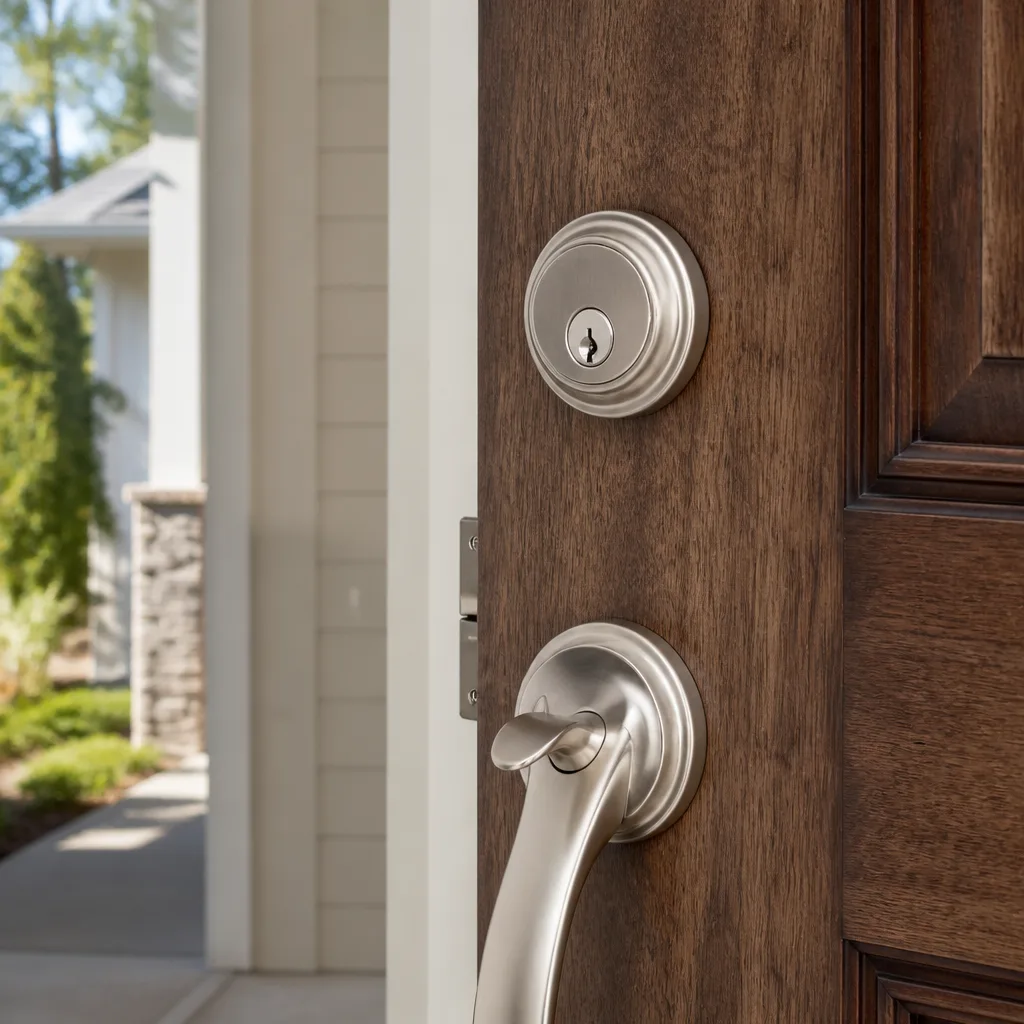 Deadbolt upgrades
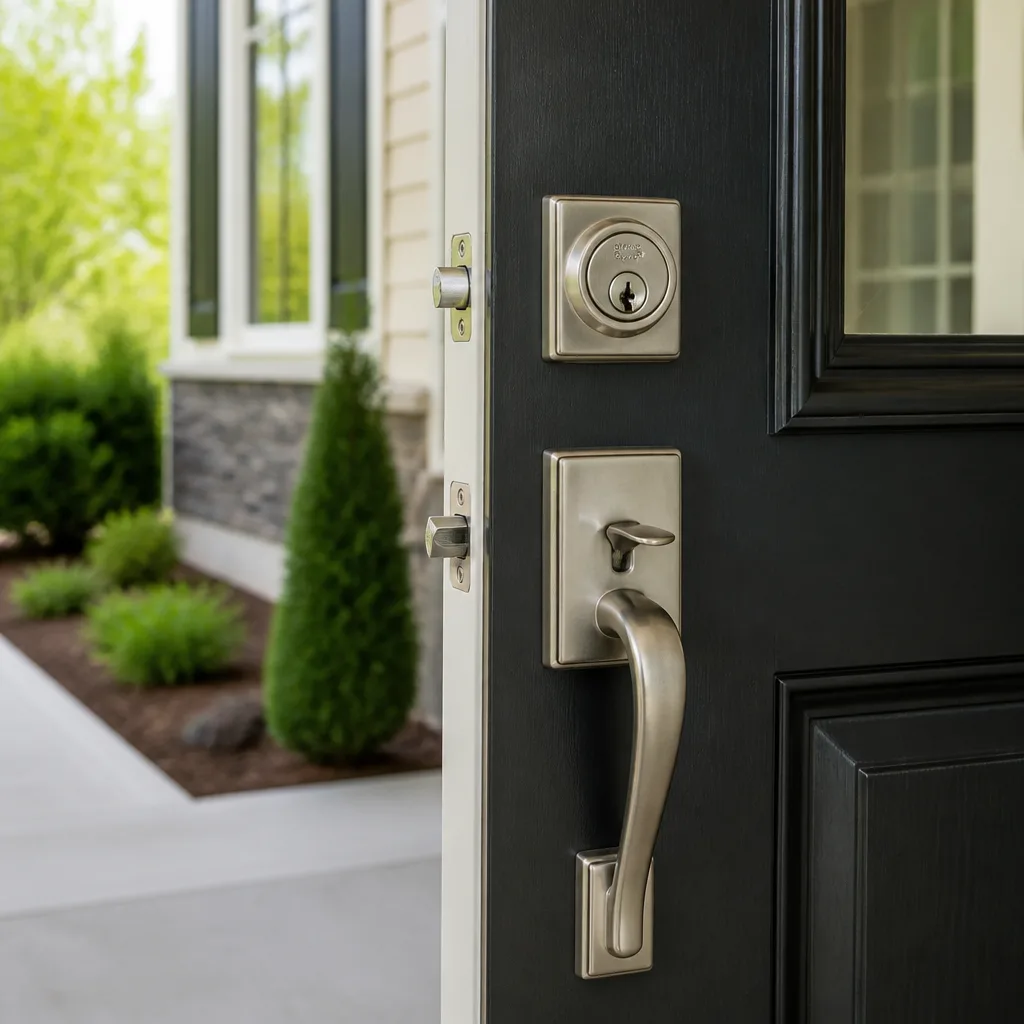 Schlage
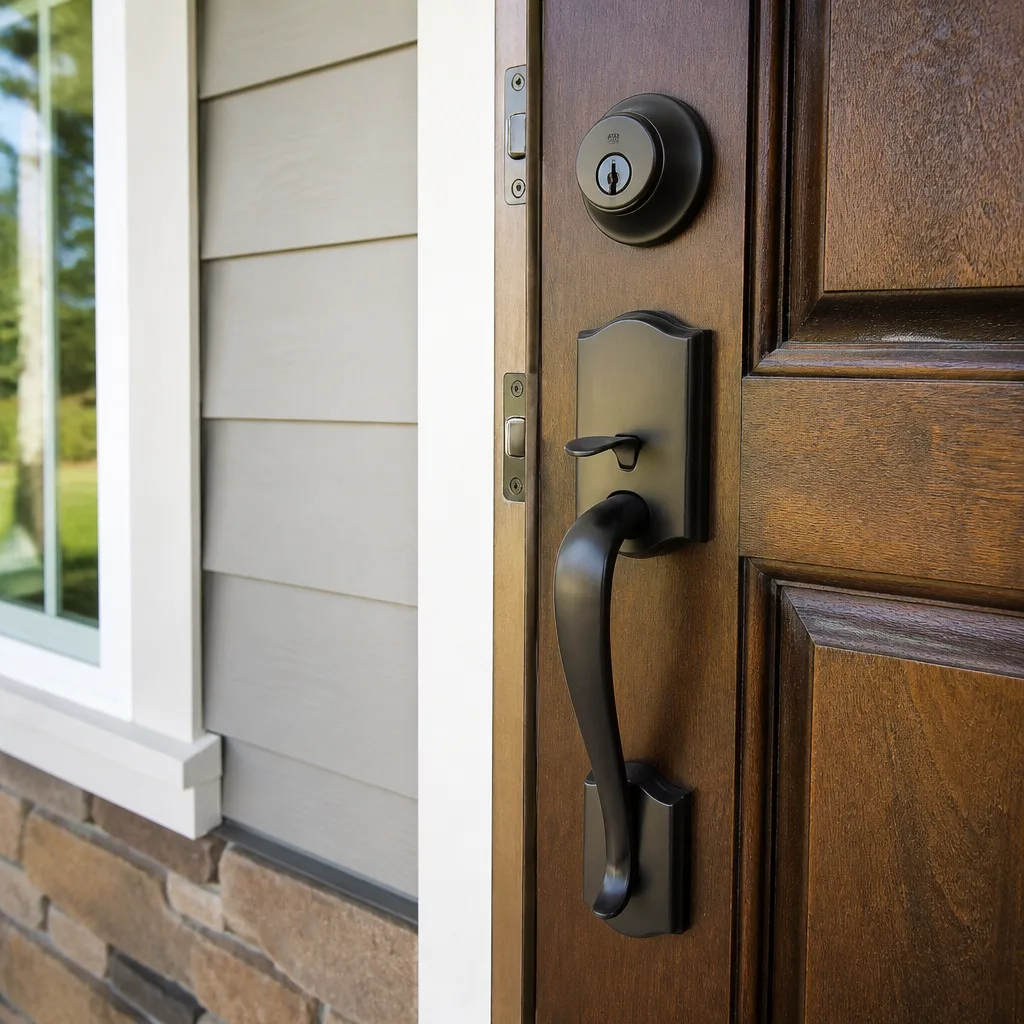 Kwikset
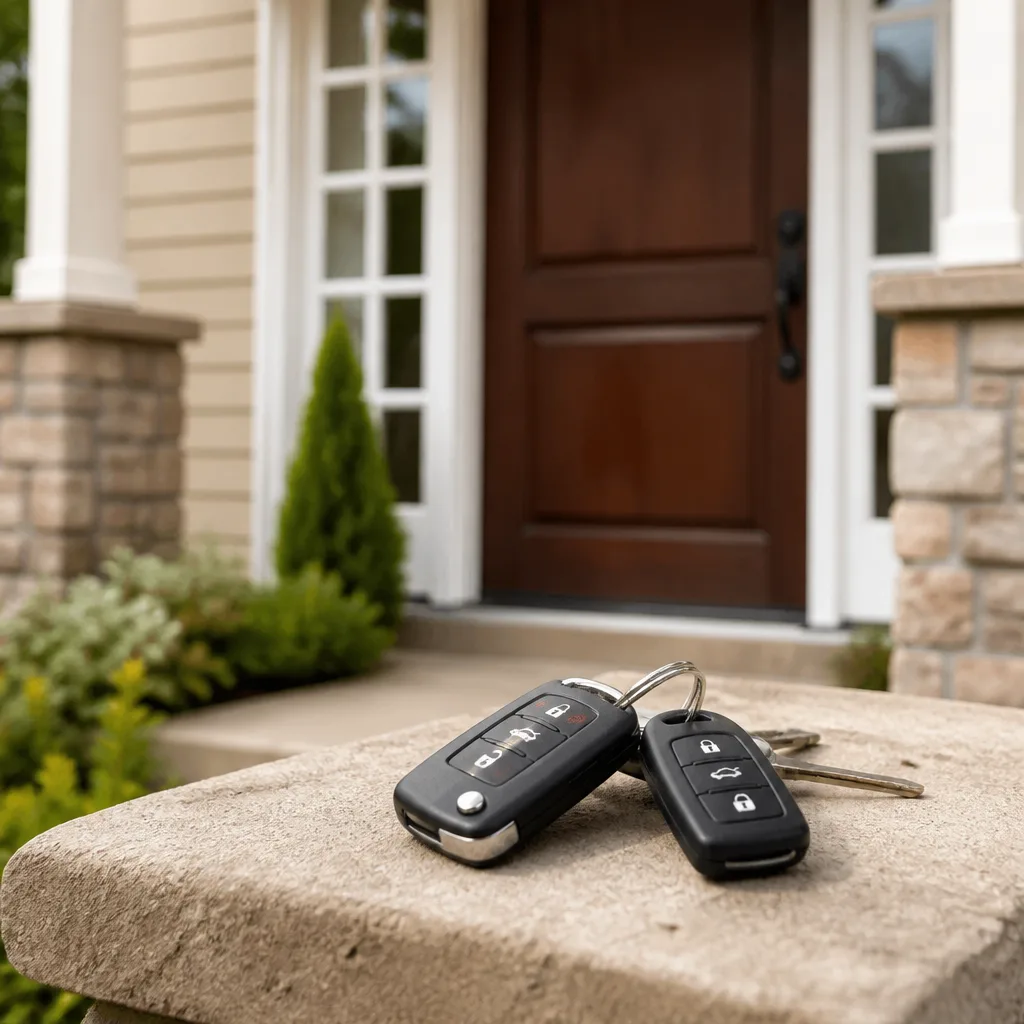 Car keys & fobs
Non-destructive entry first, always - and we re-key Schlage, Kwikset, and Baldwin locks on the spot while you watch
You get a price before we start. It does not change when we arrive. No surprises.
Get your free estimateSeasonal Locksmith Care for Washington, D.C.: Year-Round Homeowner’s Guide
The most common lockout call in Washington, D.C. is not a lost key. It’s a frozen or swollen lock cylinder in January or August, and both are almost entirely preventable with a five-minute seasonal check. This guide builds a quarterly maintenance rhythm around D.C.’s four genuine seasons so you can avoid the two a.m. panic call, the stripped deadbolt, and the $300 emergency visit. You will learn what actually fails in each season, why it fails, the exact products that prevent it, and the one time of year you should always rekey.
Styles & brands we work with
Quick Answer
Seasonal locksmith care in Washington, D.C. means four short maintenance sessions per year, timed around humidity, freezing, salt, and tenant turnover. A quarterly routine of graphite lubrication, strike plate alignment checks, weatherstripping inspection, and battery replacement prevents roughly 90% of mid-season lock failures. The most useful single habit is this: check every exterior lock’s bolt throw once per season, before the weather turns, not after it becomes a problem.
Table of Contents
- Why D.C.’s Climate Fails Locks Differently
- Winter Care: Preventing Frozen Cylinders and Swollen Frames
- Summer Care: Humidity, Swelling Frames, and Misaligned Deadbolts
- Spring Care: Salt Damage, Keypad Batteries, and Post-Winter Inspection
- Fall Care: The Rekey Season and Hardware Audit
- The Quarterly Checklists: Print These
- The Right Tooling and Products for D.C. Homeowners
- Common Mistakes to Avoid
- When to Call a Professional
- Frequently Asked Questions
- The Bottom Line
Why D.C.’s Climate Fails Locks Differently
Washington, D.C. gets all four seasons in a single week sometimes. That joke exists because it’s true: a January thaw can follow a 15-degree night within 48 hours, and an August afternoon thunderstorm follows a 94-degree morning. Each swing stresses lock hardware in a specific, predictable way. The failure you see at midnight almost always started weeks earlier.
In our experience across Washington, D.C., the two environmental factors that wreck locks are freeze-thaw cycles in winter and sustained humidity in summer. Winter condensation inside a lock cylinder freezes the pin stacks, so the key will not enter or turn. Summer humidity makes wood door frames swell, shifting the strike plate just far enough that the deadbolt no longer throws cleanly. Salt from D.C.’s de-icing trucks accelerates corrosion on low-mounted locks at ground level. Knowing which season does what lets you prevent the failure instead of responding to it.
The good news: none of this requires advanced skill or expensive tools. It requires a calendar, a tube of graphite, a Phillips-head screwdriver, and about twenty minutes every three months.
Winter Care: Preventing Frozen Cylinders and Swollen Frames
Lubricate Before the First Freeze, Not After
The single highest-leverage winter task in Washington, D.C. is lubricating every exterior lock cylinder with graphite before the first hard freeze, typically by mid-December. Graphite is a dry powder. It does not thicken in cold temperatures the way oil-based lubricants do. WD-40 is a solvent and water displacer, not a lock lubricant. It will flush out whatever protection remains, then evaporate, leaving the cylinder dry and more vulnerable to freezing. One puff of graphite into each keyway, then working the key in and out several times, distributes the powder where the pins actually move.
Do this to every exterior door, the garage access door, and any storage or shed lock that lives outside.
Check Weatherstripping and Strike Plate Alignment
A deadbolt that drags slightly in November will not throw at all in February. Cold air makes wood frames contract, but repeated rain and snow followed by indoor heat makes the same wood swell. The gap between your door and frame changes by season. When the deadbolt starts to feel resistant, the strike plate has probably drifted out of alignment.
What to Do When a Lock Freezes at 11 P.M.
- Do not force the key. A broken key inside a frozen cylinder is a far bigger problem than the frozen lock itself.
- Warm the key gently with a lighter for two or three seconds, then insert it slowly. The metal transfers heat into the ice.
- If the key will not enter at all, use a hair dryer on low heat aimed at the cylinder for 60 to 90 seconds, then try again.
- Never pour hot water on a lock. Water becomes more ice the moment it cools, and you have made the problem permanent until it fully thaws.
- If the lock opens, lubricate it with graphite the next morning. You just dried out the cylinder completely.
If the lock remains frozen after a reasonable attempt, call an Emergency Locksmith in Washington, D.C. rather than continuing to work on it. A damaged cylinder or snapped key costs more to fix than the service call.
Summer Care: Humidity, Swelling Frames, and Misaligned Deadbolts
August is the second spike in D.C. lockouts, and the cause is humidity-driven wood expansion. This is especially true in older brick row houses in neighborhoods like Capitol Hill and Petworth, where original solid-wood doors have decades of seasonal movement behind them. The deadbolt throw aligns with the strike plate in dry weather, but once sustained humidity hits, the door edge expands and the bolt drags against the plate or misses it entirely.
How to Adjust Before the Bolt Starts Dragging
- Test the throw in early June. With the door open, throw the deadbolt. It should move freely with little resistance. Then close the door and throw it again. If it feels tighter with the door closed, alignment is already shifting.
- Check the strike plate screw tension. A loose strike plate is the most common cause of a dragging bolt. Tighten the screws with a Phillips-head driver. If the screw holes are stripped, use a longer screw to bite into the framing behind the jamb.
- Mark the wear spot. Close the door and see where the bolt meets the plate. If the bolt is hitting the plate face, use a metal file to widen the opening by a millimeter or two. This is a permanent fix that weather will not undo.
- Do not sand the door. A door that swells in summer will shrink again in winter. Sanding to fit August leaves a cold draft and a misaligned lock in January.
If the deadbolt on a wooden door needs repeated adjustment year after year, the door itself is moving beyond seasonal tolerance and may need a full re-hang. That is a job for a professional, not a seasonal check.
Spring Care: Salt Damage, Keypad Batteries, and Post-Winter Inspection
By March, D.C. locks have survived freezing temperatures, road salt, and storm-driven moisture. Spring is the inspection and recovery season. The goal is to identify winter damage before summer humidity compounds it.
Post-Salt Inspection on Exterior Hardware
D.C. roads get treated with salt brine and rock salt all winter. That salt aerosolizes and travels. It settles on low-mounted locks, garage latch handles, and any hardware facing the street. Salt does two things: it attracts moisture from humid spring air, and it accelerates oxidation on brass and steel components.
- Wipe down all exterior locks and handles with a damp cloth in late March.
- Inspect low-mounted locks (garage access doors, street-facing gates) for white chalky buildup or pitting.
- Apply graphite to any cylinder that feels gritty or slow after the wipe-down.
- Check all visible screws for surface rust. Replace any that are significantly corroded before they strip or snap.
Keypad and Electronic Lock Battery Replacement
Keypad deadbolts and smart locks are now common enough in Washington, D.C. that battery failure is a routine lockout cause. The pattern is predictable: batteries drain faster in cold weather, then fail unexpectedly in spring when owners stop thinking about them. A keypad that dies in April was weak in January.
Replace batteries in every keypad lock, garage keypad, and smart deadbolt each spring, regardless of current charge level. Use lithium batteries on exterior-facing hardware. They hold voltage steady in heat and cold, which alkaline batteries do not. If your keypad accepts a physical key backup, test that key while you are there. Most electronic lock failures happen because the keypad works, the battery dies, and the manual key was never tested.
Fall Care: The Rekey Season and Hardware Audit
Fall is the most important season for security decisions in Washington, D.C. It follows the heaviest turnover period for rental leases, sublets, and summer tenant changes. It is also the last window before hardware gets tested by winter. At Coral Locksmith home, we recommend treating October as the annual security audit month.
Why Fall Is the Right Time to Rekey
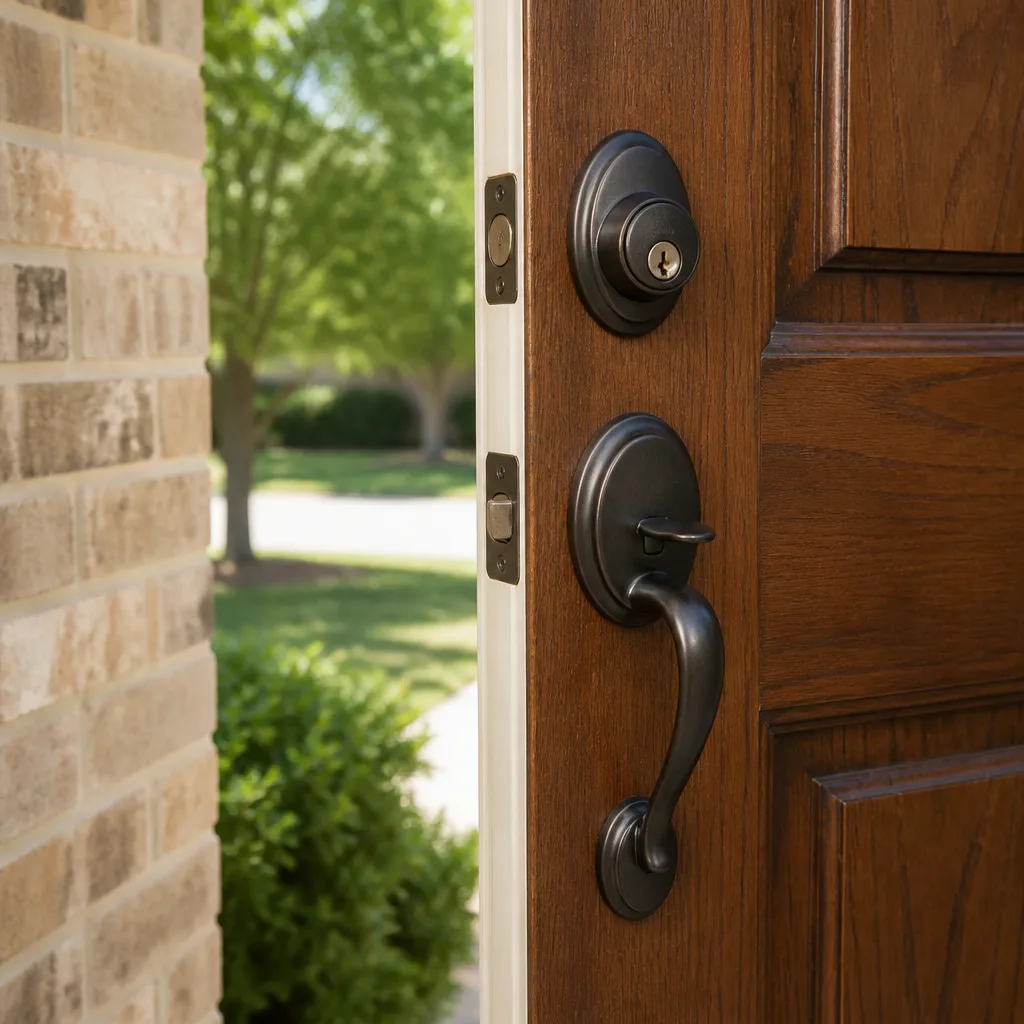
If you have had a roommate move out, a subletter leave, a contractor working with a key, or an Airbnb guest finish their stay, you do not actually know who has a working key to your front door. Rekeying changes the internal pin configuration so that existing keys stop working and a new key takes over. It does not replace the hardware, so it is usually faster and less expensive than swapping out locks.
In a city like Washington, D.C., where group houses, internships, and semester-long sublets are common, fall is the natural moment to reset access. A Rekey Locks in Washington, D.C. visit in October means every key that ever circulated becomes worthless before the holiday travel season.
Fall Hardware Audit: What to Check
- Every exterior door lock: does the key turn smoothly? Does the deadbolt throw fully?
- Window locks on all ground-floor and fire-escape-adjacent windows.
- Sliding door pins and the locking mechanism on the track.
- Garage door manual release and any side access door.
- Mailbox and package-room locks, which see daily use and direct weather exposure.
Fall is also the season to assess whether your hardware is still appropriate. A basic Kwikset that has been reliable for fifteen years might not be the right choice if your neighborhood has seen break-in reports. Upgrading to a premium residential line like Baldwin or a high-security system from Medeco or Mul-T-Lock is a one-time investment that lasts decades in D.C. housing stock.
The Quarterly Checklists: Print These
Here is the complete seasonal maintenance rhythm for Washington, D.C., in checklist form. Each season takes roughly twenty to thirty minutes for a typical rowhouse or single-family home with three exterior doors.
Winter (December)
- Graphite every exterior keyway, including garage access door
- Test deadbolt throw on all exterior doors with door closed
- Check weatherstripping where door meets frame, replace if compressed or torn
- Confirm all strike plate screws are tight
- Verify the garage manual release works before snow season
Spring (March)
- Wipe down all exterior locks to remove salt residue
- Inspect low-mounted hardware for corrosion or pitting
- Replace keypad and smart lock batteries
- Test the backup key on every electronic lock
- Graphite any cylinder that feels slow after cleaning
Summer (June)
- Test deadbolt throw with door open vs. closed
- Check for swollen frames causing bolt drag
- File strike plate opening if bolt drags on face
- Lubricate sliding door tracks and inspect sliding door pins
- Inspect window locks on all accessible windows
Fall (October)
- Rekey any locks exposed to turnover, sublets, or contractor keys
- Test every exterior door and garage lock for smooth operation
- Inspect window locks on ground floor and rear access points
- Evaluate whether any hardware needs replacement or security upgrade
- Confirm all backup keys and key copies still work
The Right Tooling and Products for D.C. Homeowners
The entire seasonal routine needs four items: a tube of powdered graphite, a Phillips-head screwdriver, a replacement set of keypad batteries, and a damp cloth. That is the complete toolkit. You do not need special training, and you should not use anything else on a lock cylinder.
Graphite vs. Oil: Why the Distinction Matters
Powdered graphite is the only lubricant to use inside a lock cylinder in Washington, D.C. Oil-based products, including WD-40, Teflon sprays, and household oils, are problems in both seasons. In winter, oil thickens in freezing temperatures and makes the lock harder to turn. In summer, oil attracts dust and pollen from D.C.’s long growing season, turning into a paste that gums up the pin stacks. Graphite stays dry. It works the same at 20 degrees and 95 degrees. Use it every season, but especially before the first freeze and after spring cleaning.
Why Strike Plate Tension Is a Seasonal Issue
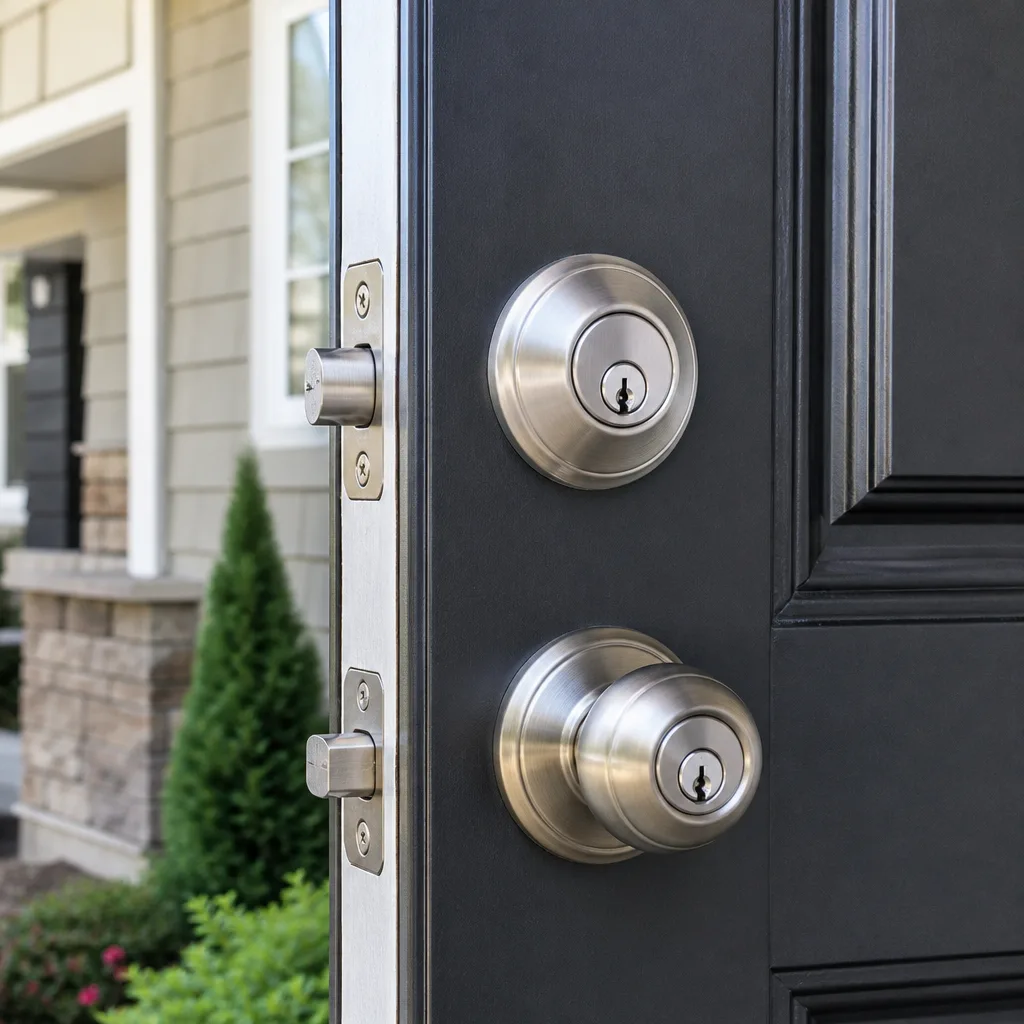
The strike plate is the metal plate on the door frame that receives the deadbolt. In D.C., with its seasonal humidity shifts, strike plate screws work loose because the wood behind them expands and contracts. A quarter-turn slip twice a year is enough to keep the deadbolt alignment correct. Checking tension takes sixty seconds per door and prevents the most common “my key turns but the door will not open” situation.
Electronic Locks and D.C. Weather
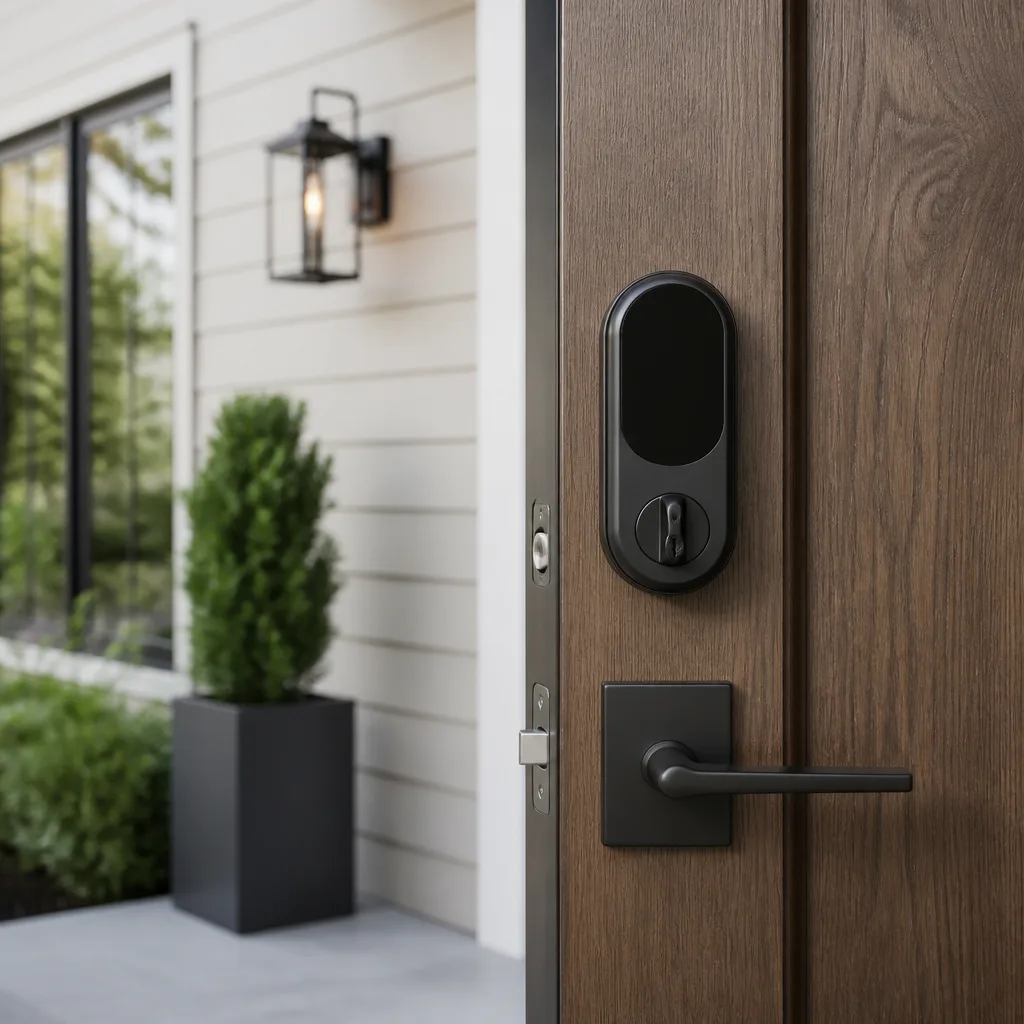
Smart locks and keypads present a specific seasonal issue in Washington, D.C.: neither extreme is their friend. Intense cold drains battery voltage faster, which is why a lock installed in fall can die by March. Intense summer heat degrades internal circuit boards over time, especially on doors that get direct afternoon sun. The practical rhythm is simple: spring battery replacement, fall firmware check, and if the lock fails in the middle of a heat wave or freeze, know that every electronic lock also has a physical keyway. Having a spare physical key hidden or held by a neighbor is the difference between a five-minute inconvenience and an Emergency Locksmith in Washington, D.C. visit.
When Hardware Brand Actually Matters
Most locks on D.C. rowhouses are consumer grade, and many have been in place since the previous decade. There is nothing wrong with a Schlage or Kwikset that has been maintained. But if you are replacing locks anyway, the brand tier matters. A Yale or Baldwin moves you into premium residential hardware with better internal tolerances and stronger finishes. For property owners who manage rentals or commercial space in Washington, D.C., high-security lines like Medeco, Mul-T-Lock, and Abloy offer key control: keys that cannot be duplicated at a hardware store, and cylinders that resist drilling and picking. If you have never considered moving beyond consumer hardware, this is a conversation worth having once, even if you decide to stay where you are.
Common Mistakes to Avoid
- Using WD-40 on a lock cylinder. It is a solvent, not a lubricant. In D.C.’s climate, it leaves the cylinder dry and accelerates freezing in winter while attracting summer dust.
- Sanding a swollen door in August. The door will shrink back in winter, leaving a large gap that defeats the deadbolt’s throw and lets cold air pour in.
- Forcing a frozen key. A snapped key inside a frozen cylinder turns a five-minute thaw into a full cylinder extraction and replacement.
- Ignoring a stiff lock because “it still works.” Stiffness is the early warning sign. In D.C., the weather that causes the stiffness will be back within months, and the next failure may be when you are standing outside at midnight.
- Not rekeying after tenant turnover. A lease ends, a key circulates, and nobody remembers how many copies exist. Rekeying is the only way to reset access completely.
- Relying solely on an electronic lock with no physical key tested. Battery failure in a January freeze or August heat wave is a matter of when, not if.
- Replacing a lock when a rekey would do. If the existing hardware is sound, rekeying changes the key without changing the lock. It is faster, less expensive, and leaves your hardware intact.
When to Call a Professional
If a lock has been drilled, visibly damaged, or is showing signs of tampering after a break-in attempt, do not try to repair it yourself. A compromised cylinder or skewed housing is a security liability, not a maintenance item. If you have a key that turns but the deadbolt will not throw, the internal tailpiece may be damaged, and opening the lock will not tell you that. Broken keys, frozen locks that will not thaw, and smart locks that have lost programming all warrant a call. Coral Locksmith offers free estimates in Washington, D.C. Call (855) 382-1343 and describe the problem. If the fix is a five-minute graphite application, we will tell you that. If the cylinder needs replacement, you will know before anyone is dispatched and the price quoted on the phone is the price on the invoice.
Frequently Asked Questions
If you do the quarterly checks yourself, the annual cost is roughly $15 for graphite and batteries. Professional maintenance visits, including a full inspection of all exterior doors and locks in a Washington, D.C. rowhouse, typically run $89 to $150 depending on the number of doors. Call (855) 382-1343 for a free phone estimate.
Yes. Coral Locksmith does not add any call-out surcharge or dispatch fee on arrival. The price you receive on the phone is the price on the invoice. If the technician finds additional work is needed, you will approve it before it is done.
Rekey whenever a key changes hands to someone who no longer needs access: after a tenant move-out, a sublet ending, a roommate departure, or a contractor completing work. In Washington, D.C., most rekeying clusters in September and October, after the summer sublet season. If you are unsure whether your key has been copied, rekeying removes the uncertainty entirely.
Washington, D.C.’s freeze-thaw cycle is the cause, not sustained cold. Moisture works into the cylinder during warmer daytime temperatures, then freezes overnight when temperatures drop. A cylinder lubricated with graphite before the first freeze has far less internal moisture and resists freezing. An unlubricated cylinder freezes easily even at 30 degrees.
You can adjust the strike plate, which is the correct first fix. Do not sand the door. If the door swells in summer and shrinks in winter, sanding creates a year-round gap. Tighten the strike plate screws, then file the plate opening slightly if the bolt drags. If the problem persists year after year, the door may need a professional re-hang.
Not everyone does. Consumer and premium residential hardware is sufficient for most homeowners. High-security locks like Medeco, Mul-T-Lock, and Abloy matter when you need key control, meaning keys that cannot be duplicated at a hardware store, or when you want maximum drill and pick resistance. Property managers and owners in higher-crime areas of Washington, D.C. most often make this upgrade. Call (855) 382-1343 to discuss what is right for your door and your budget.
Coral Locksmith handles urgent lockouts throughout Washington, D.C. as quickly as dispatch allows. The office will give you an honest estimated arrival window when you call, and the price is confirmed on the phone before anyone is sent. Call (855) 382-1343 and we will tell you exactly what to expect.
The Bottom Line
Seasonal locksmith care in Washington, D.C. is not a complicated task. It is a calendar habit: graphite in December, inspection in March, alignment in June, rekey in October. Twenty minutes per season prevents the two a.m. lockout, the stripped deadbolt, and the security gap that comes from an untracked key. The hardware on your doors matters less than the consistency with which you check it. A well-maintained mid-grade lock outperforms a neglected high-security one every season of the year. If you would rather have someone else build the habit, Coral Locksmith handles maintenance, rekeying, Car Key Replacement in Washington, D.C., and Emergency Locksmith in Washington, D.C. response. Call (855) 382-1343 to schedule a seasonal check before the weather turns.
Written by the team at Coral Locksmith, serving Washington, D.C. since 2018.