
Last updated October 30, 2026
 House lockouts
 Re-keying
 Deadbolt upgrades
 Smart locks
 Schlage
 Kwikset
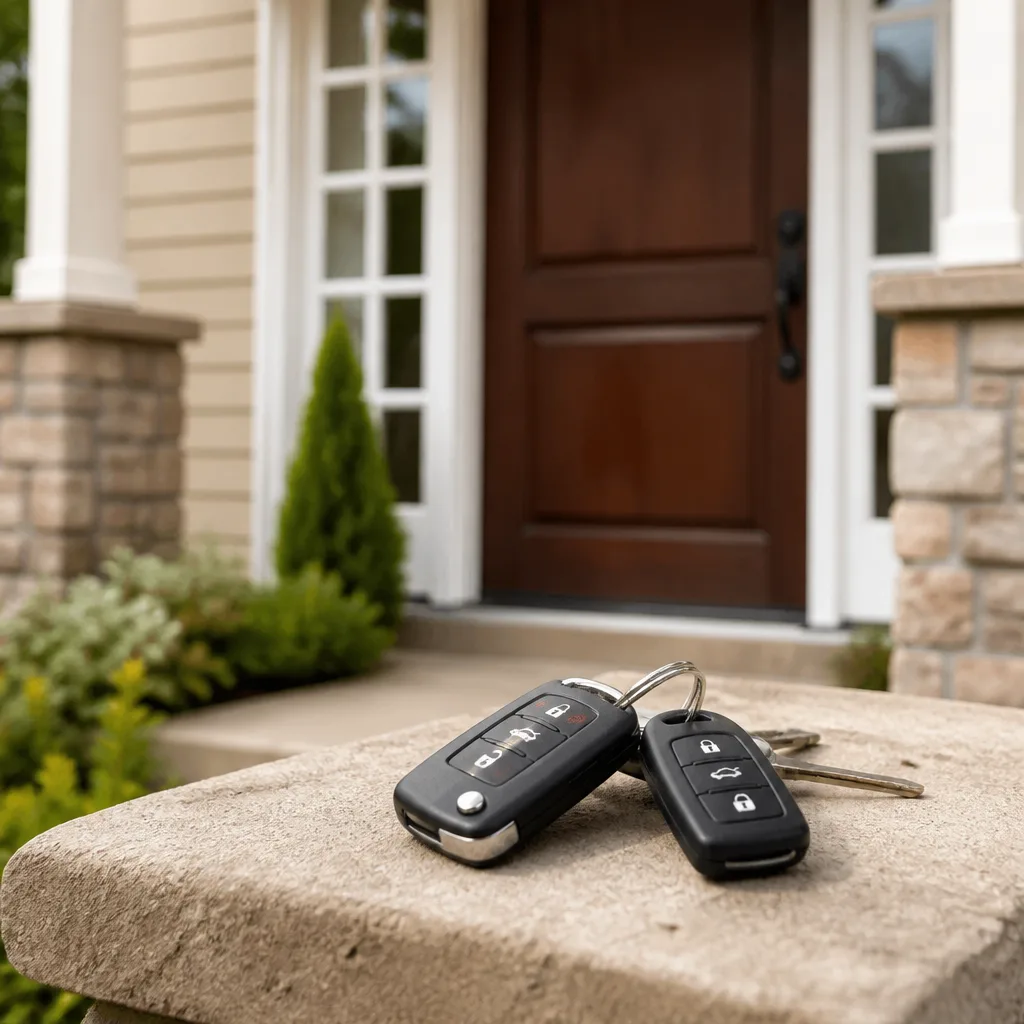 Car keys & fobs
Non-destructive entry first, always - and we re-key Schlage, Kwikset, and Baldwin locks on the spot while you watch
You get a price before we start. It does not change when we arrive. No surprises.
Get your free estimateThe Complete Car Key Replacement Guide for Washington, D.C. Homeowners
Here’s a number that should stop you cold: a 2023 AAA survey found that drivers overestimate what a dealer charges for a replacement car key by roughly 40% – and underestimate how long the process takes by half. In Washington, D.C., that math gets worse. We’ve talked to drivers who waited five business days or more for a transponder key from a D.C. dealership, all while paying for rideshares or borrowing a family member’s car. Our Car Key Replacement guide exists to fix that. You’ll learn exactly what type of key your vehicle uses, what replacement should realistically cost in the District, which of the three main replacement channels makes sense for your situation, and how to cut hours off the process by preparing documents and information before you call anyone.
Quick Answer
Car key replacement in Washington, D.C. typically costs between $150 and $450 for a transponder key and $250 to $650 for a smart key or proximity fob, depending on your vehicle’s year and security system. A mobile locksmith can usually replace and program most keys the same day at your home or office, while a dealership often requires you to tow the car in and wait three to seven business days. The fastest path: identify your key type, have your VIN and proof of ownership ready, and call an independent locksmith first. That single call typically saves D.C. drivers $100 to $300 and at least two days compared with the dealer route.
Styles & brands we work with
Table of Contents
- The Four Key Types You Actually Have
- Who Replaces Car Keys in Washington, D.C. – and What Each Channel Costs
- Why D.C. Makes Key Replacement Harder Than It Should Be
- The VIN Shortcut: Pre-Cut and Program Before Arrival
- What Documents You Need (and What Happens When They’re Locked in the Car)
- Step-by-Step: From Lost Key to Working Key in One Day
- Common Mistakes to Avoid
- When to Call a Professional
- Frequently Asked Questions
The Four Key Types You Actually Have
Before you call anyone, you need to know what you’re replacing. Most D.C. drivers can’t name their key type, and that’s not a failure on their part – keys have changed dramatically over the past two decades, and the distinctions are rarely explained. But getting this wrong is the single most common reason people get overcharged or wait longer than necessary. Here’s the identifier guide we use to help customers figure it out in under a minute.
1. Basic Blade Key (Pre-2000 Vehicles)
This is a standard metal key with a plastic head. No buttons, no chip, no electronics. It looks like the key to your parent’s 1994 Honda. You can see cuts on one or both edges. If this is what you have, replacement is simple: a locksmith cuts a new blade from your key code, or decodes your existing key if you have a spare. Expect to pay $25 to $75 in Washington, D.C. There is no programming involved, so the dealer has no real advantage here, and a Coral Locksmith home service call can handle it in under 30 minutes.
2. Transponder Key (1998 – 2015 Range)
The transponder key looks like a basic blade but has a black plastic head that’s slightly thicker than older keys. Inside that head is a microchip that sends a unique code to your car’s ignition. Without the correct code, the engine cranks but won’t start. Transponder keys require two steps: cutting the blade and programming the chip. A Washington, D.C. mobile locksmith typically charges $150 to $350 for this, including the key, cutting, and programming. The dealer will ask for $250 to $500 for the same key, and you’ll usually need to bring the vehicle to them.
3. Proximity Fob / Smart Key (2014 – Present)
This is the key that never leaves your pocket or purse. It’s a plastic fob with buttons for lock, unlock, trunk, and sometimes remote start. Many vehicles with smart keys use a push-button ignition. The fob communicates with your car through low-frequency signals. Replacement is the most expensive type, ranging from $250 to $650 in the D.C. market depending on whether you go through a locksmith or dealer. Programming requires specialized diagnostic equipment, which is why many independent shops historically couldn’t do this work – but that’s changed significantly in the last few years. If you’re looking for Car Key Replacement in Washington, D.C., an independent locksmith with the right equipment can now do most smart keys on-site.
4. Switchblade Key (Mixed Years, Late 1990s – 2015)
This is the key that folds into a fob at the press of a button. VW, Audi, BMW, and some GM vehicles used this style heavily. The blade and remote are one assembled unit, but the blade can sometimes be replaced independently if the remote still works and only the metal part is damaged. In Washington, D.C., a switchblade key replacement through a locksmith runs $180 to $400 depending on whether the remote electronics are included. If the remote portion still works and you just need a new blade cut and attached, you might pay as little as $75 to $120.
Key Takeaway: Identifying your key type before you call saves everyone time. Use this list, check our more guides & resources, or text a photo of your key to the locksmith before committing to a service call. A good locksmith will tell you honestly what the replacement involves.
Who Replaces Car Keys in Washington, D.C. – and What Each Channel Costs
Washington, D.C. drivers have three main channels for car key replacement: the dealership, a national chain (like a hardware store or big-box auto service), and an independent mobile locksmith. The three are not interchangeable, and the differences compound in an urban environment like D.C. Here’s how each channel actually performs.
| Channel | Basic Blade Key | Transponder Key | Smart Key / Proximity Fob | Typical Turnaround in D.C. |
|---|---|---|---|---|
| Dealership | $50 – $100 | $250 – $500 | $400 – $700+ | 3 – 7 business days, often requires tow-in |
| National Chain / Hardware Store | $30 – $60 | $80 – $200 (clone only, no programming for new keys) | Generally not available | Same day for basic blades; transponder clones take 30 – 60 min |
| Independent Mobile Locksmith | $25 – $75 | $150 – $350 | $250 – $650 | Same day, on-site, 60 – 90 min typical |
Three things stand out in this comparison. First, dealer pricing for transponders and smart keys is not just higher – it’s structurally different, because dealers often add a diagnostic fee on top of the key cost. Second, the national chains can clone some transponder keys, but cloning has limits: a cloned key copies the signal from your existing key, meaning it works only if you still have a functioning original. If your key is lost (not just broken), a clone won’t help. Third, the independent locksmith route is the only one that brings the cutting and programming equipment to your driveway or parking spot in Washington, D.C. – no tow, no day off work, no three-day wait.
And a note on why dealers push replacement over repair: dealerships often don’t stock blades for vehicles more than a few years old. That means ordering from a regional parts hub, which adds days. A locksmith who carries key blanks for most major brands can cut on the spot. This is the practical reality of car key work in the District, and it’s one reason many drivers who start at the dealer end up calling a locksmith anyway.
Why D.C. Makes Key Replacement Harder Than It Should Be
Washington, D.C. is not the suburbs, and car key replacement friction points are different here than in Arlington or Bethesda. Understanding these before you lose your key will change how you approach the whole situation.
Street Parking and Towing Reality
If your car is parked on the street in Washington, D.C., and the key is lost, the dealer route gets complicated fast. Most D.C. dealerships won’t cut and program a key without the vehicle present, which means towing. If you’re parked in a zone with daytime restrictions, or you’re in a neighborhood like Capitol Hill where street sweeping enforcement is aggressive, you may face a towing fee of $150 to $250 just to get the car to the dealer. On top of that, many D.C. streets have limited parking directly outside dealerships, adding walking distance or paid garage access to the errand. A mobile locksmith eliminates all of this by coming to the car, whether it’s parked on East Capitol Street or in a garage in Navy Yard.
Overnight Parking and Time Pressure
D.C. neighborhoods like Georgetown, Dupont Circle, and parts of Adams Morgan have overnight parking restrictions near commercial corridors. If you lose your key in the evening and your car is in one of these zones, waiting two days for a dealership appointment isn’t just inconvenient – it can result in fines or impound. The urgency changes the math. A same-day mobile locksmith visit in Washington, D.C. becomes less of a convenience and more of a necessity when a $250 key is weighed against a $100 overnight ticket plus a $200 tow.
Proof-of-Ownership Rules Differ by Channel
Dealers in Washington, D.C. are strict about documentation. They will ask for a valid driver’s license, the vehicle registration, and often proof of insurance. Some will also require that the person requesting the key matches the name on the title. Locksmiths have more flexibility, though the rules still exist. In practice, an independent locksmith can often verify ownership through a combination of the VIN, your ID, and your ability to show registration electronically (many D.C. drivers keep vehicle documents in the car, which is itself a problem we’ll address below). The point is that if your registration is locked inside the car, a dealer will typically refuse service until you produce a duplicate from the DMV. A mobile locksmith can sometimes work with alternatives – a lease agreement, an insurance card, or even a vehicle purchase agreement – because the risk of theft is lower for a locksmith arriving with equipment at a single location.
D.C. Vehicle Age Distribution Makes Older Keys Common
Washington, D.C. has a substantial stock of older vehicles. Walk through any residential neighborhood in Petworth or Brightwood Park and you’ll see late-1990s and early-2000s sedans and SUVs. Many of these use the older transponder or basic blade keys. This matters because older car models often have key codes that can be pulled from the VIN – no original key required. A newer vehicle with a rolling-code smart key is a different challenge. Knowing that your older car is actually easier for a locksmith to handle may change which channel you pick.
The VIN Shortcut: Pre-Cut and Program Before Arrival
If you take one thing from this guide, make it this: know your VIN, and share it with the locksmith before they arrive. The Vehicle Identification Number is a 17-character code visible through the lower corner of your windshield on the driver’s side. It’s also on your insurance card, your registration, and often in your vehicle’s mobile app if your car has an owner portal.
When a locksmith has your VIN in advance, several things happen that cut both time and cost. The locksmith can pull your vehicle’s exact key code from the manufacturer database. That key code specifies the precise cuts required for your blade. The locksmith can then cut the key at their van or shop before heading to your car. If your vehicle needs programming, the locksmith can also look up the exact programming sequence for your year, make, and model, and verify that their diagnostic tools are compatible. By the time they arrive in Washington, D.C., the physical key work is done and only the on-site programming remains.
What this means in practical terms: a job that might take 90 minutes on-site can be cut to 30 minutes or less. The locksmith doesn’t have to disassemble your lock to decode a worn key. They don’t have to call technical support from your driveway. A VIN shared in advance through a 10-second text message is the single most effective way to shorten a car key replacement appointment in Washington, D.C.
One note: some vehicles, particularly European models like Volkswagen, Audi, and BMW, have key codes that are only available through licensed dealer networks. A good locksmith will be honest about this. They may still be able to decode your existing key if you have a spare, but they won’t pretend the VIN shortcut works when it doesn’t. This kind of transparency is one sign you’re talking to a professional rather than a call-center dispatcher who promises anything to close a booking.
What Documents You Need (and What Happens When They’re Locked in the Car)
Here’s the awkward scenario we hear about constantly in Washington, D.C.: the key is lost, and the registration or title is in the glovebox. Locked inside the car. Along with the key, technically, except there’s no key. So you’re standing next to a locked car, claiming you own it, but the proof is inside.
This is where the channel differences matter most. A dealership in Washington, D.C. will, in most cases, require you to produce the registration, title, or both before they’ll order or program a key. If those documents are in the car, you have a circular problem. The DMV can issue a duplicate registration, but that takes days and a trip to a D.C. DMV service center. A mobile locksmith can often resolve this differently. Because the locksmith arrives at the vehicle’s physical location, and because their equipment lets them verify the VIN against the title or registration documents you may have electronically, the practical verification standard is different. An insurance card on your phone, a bill of sale, a lease agreement, or even a current D.C. parking permit in your name can sometimes serve as acceptable alternatives.
That said, legitimate locksmiths won’t skip verification entirely. If you tell a locksmith you have no paperwork of any kind and the car’s title isn’t in your name, they should walk away. This is bad business for everyone except car thieves. But the reality of mobile key replacement in D.C. is that a locksmith can often verify ownership through documentation you produce from your phone or wallet – no glovebox access required. If you have a Emergency Locksmith in Washington, D.C. situation where the key is lost inside the locked car, same-day resolution is typically possible.
Documents to Have Ready for Any Car Key Replacement
- Driver’s license or state-issued photo ID – always required, no exceptions. The name can differ from the title in some cases (a spouse driving a car titled to the other), but you’ll need to explain the relationship.
- Vehicle registration – the gold standard. A photo of the registration on your phone works for most locksmiths.
- Proof of insurance – often accepted when the registration is unavailable. Your insurance card has the VIN and your name.
- VIN (17-character code) – visible through the windshield, on the driver’s door jamb, or on any insurance/registration document. Write it down now, before you need it.
- Year, make, and model – you’ll be amazed how many drivers can’t tell a locksmith what year their car is. It matters because key systems change by model year.
Step-by-Step: From Lost Key to Working Key in One Day
Here’s the sequence that works most reliably for Washington, D.C. drivers who want a replacement car key without the dealership wait or tow bill. This is the same process we walk our customers through on the phone.
- Identify your key type. Use the four-type guide at the top of this page. Basic blade, transponder, proximity fob, or switchblade. This determines everything downstream.
- Write down your VIN. Look through the windshield on the driver’s side, or pull it from your insurance card. Text it to the locksmith when you call.
- Call a mobile locksmith in Washington, D.C. before calling a dealer. The locksmith quote will be lower, the timeline will be shorter, and the locksmith will tell you honestly if your specific vehicle requires dealer-only work. If it does, you’ve lost nothing by asking.
- Confirm the full price on the phone. A reputable locksmith will quote you a complete price: the key blank, the cutting, the programming, and the service call. No mysterious surcharges on arrival. If the price you’re quoted on the phone isn’t the price on the invoice, you called the wrong company.
- Meet the locksmith at the vehicle. You’ll need to be present with your ID and whatever proof of ownership you have – even if that’s just your insurance card on your phone.
- Test everything before the locksmith leaves. The new key should lock and unlock all doors, open the trunk, and start the engine (or activate the push-button ignition systems). If you have remote start, test it too. Any reputable locksmith in D.C. will wait with you for this full test.
If you’re calling Coral Locksmith, the process is the same but with one addition: we’ll ask for a photo of your existing key if you have one. A clear photo helps us confirm the key type before we arrive, meaning less back-and-forth at the vehicle.
Common Mistakes to Avoid
- Calling the dealer first out of habit. The dealer is the most expensive channel in Washington, D.C. for every key type, and the slowest. Twenty years ago, dealer-first made sense because independent locksmiths didn’t have programming equipment. That era is over. Call a locksmith first and save $100 to $300, plus a tow bill.
- Bait-pricing traps. Some companies advertise a low initial number, like “$19.99 car key replacement,” then add programming fees, emergency fees, and “service call” charges on arrival that triple the bill. In Washington, D.C., where competition is intense and everyone is a Google search away, this bait-and-switch is common. The red flag: the company won’t quote a total price over the phone. If they won’t commit to a number, don’t book the appointment.
- Being vague about your key type. “It’s a regular key, I think” is not helpful when the difference between a basic blade and a transponder is $100 or more. Take the extra 60 seconds to identify your key from the list above.
- Forgetting you have a spare. If you have a second key, even a worn one, the replacement process becomes dramatically faster and cheaper. A locksmith can decode the spare to cut a fresh blade, and can often clone a transponder from the functioning key. Before you report the key lost, check drawers, jacket pockets, and the car itself.
- Waiting to replace a failing key. Keys don’t usually die suddenly. If your key needs to be jiggled, if the remote works only from five feet away, if the transponder sometimes triggers the anti-theft warning – that’s your warning. Replace it now, while the car still recognizes the key. Once it fails completely, you’ve lost the reference key and the programming logic is harder.
- Not writing down your VIN now. It takes 30 seconds. Put it in your phone’s notes app. When the key is lost on a Friday night in Washington, D.C., that number is the difference between a 9 p.m. fix and a Monday appointment.
When to Call a Professional
There are exactly two scenarios where car key replacement should always be a professional job. The first is any key with a transponder or smart fob. The programming step requires diagnostic equipment and vehicle-specific software that simply isn’t available to consumers. Attempting this without the right tools, or with aftermarket programming gadgets, can corrupt the vehicle’s immobilizer system, turning a $250 key replacement into a $1,000 dealer repair. The second is any situation where you’re locked out of the car in an unsafe location – late at night, in an unfamiliar neighborhood, or with children or pets involved. Speed matters more than price in those moments. If you’re ever unsure about your key type or the right approach, Coral Locksmith offers free estimates in Washington, D.C. – call (855) 382-1343 and we’ll tell you honestly what the job involves and what it will cost.
Frequently Asked Questions
Car key replacement in Washington, D.C. costs between $25 and $75 for a basic blade key, $150 to $350 for a transponder key, and $250 to $650 for a smart key or proximity fob, depending on the vehicle’s year and whether you use an independent locksmith or a dealership. The dealer route typically adds $100 to $300 per key and requires you to bring the vehicle in, often by tow. Call (855) 382-1343 for an exact quote – the price we give on the phone is the final price on the invoice.
Yes. A mobile locksmith in Washington, D.C. can replace and program most transponder keys and smart keys the same day, typically within 60 to 90 minutes of arriving at your location. The key is whether the locksmith has the right programming equipment for your specific make and model – which is why you should always share your VIN before the appointment. Call (855) 382-1343 to confirm same-day availability for your vehicle.
At Coral Locksmith, the price quoted on the phone is the price on the invoice, period. The quote includes the key blank, cutting, programming, and the service call. If a company won’t give you a firm price before dispatching someone, that’s a red flag. Call (855) 382-1343 for a complete, no-surprise quote.
A mobile locksmith in Washington, D.C. can often verify ownership through alternatives when the registration is locked in the vehicle: your driver’s license, an insurance card (physical or on your phone), a lease agreement, or a bill of sale. Dealerships are typically stricter and will refuse service until you produce a duplicate registration from the DMV. A locksmith arrives at the car’s physical location and can work with reasonable documentation you have on hand. Call (855) 382-1343 to discuss your specific situation.
No. In most car key replacement cases in Washington, D.C., you do not need to tow your car anywhere. A mobile locksmith brings cutting and programming equipment to your parked car and completes the job on-site. The dealership route typically requires the vehicle to be present, which means a tow and a wait of three to seven business days. Call (855) 382-1343 first – if your vehicle genuinely requires dealer-only equipment, we’ll tell you honestly before you spend a dollar.
Ask them. A qualified locksmith will ask for your year, make, model, and VIN, then confirm whether their diagnostic equipment covers your vehicle before dispatching anyone. If a company schedules an appointment without asking for your VIN or vehicle details, that’s a warning sign. Different cars have different key systems, and some (particularly European brands) require brand-specific programming tools. A professional will know the difference and tell you upfront. Coral Locksmith offers free estimates in Washington, D.C. – call (855) 382-1343.
The Bottom Line
Car key replacement in Washington, D.C. should be a one-day, one-call event, not a week-long saga involving a tow truck and a dealership service desk. The mechanism is straightforward: identify your key type, write down your VIN, call an independent mobile locksmith instead of defaulting to the dealer, and have your ID and whatever proof of ownership you can produce ready for the appointment. In most cases, a Washington, D.C. mobile locksmith will cut and program your new key at your car in under 90 minutes, for $100 to $300 less than the dealer would charge. Sharing your VIN in advance turns a stressful recovery into a routine service call. And when you do call, ask for the total price upfront – the full quote you get over the phone should be the exact price on your invoice.
Written by the team at Coral Locksmith, serving Washington, D.C. since 2018.
Need a car key replaced today in Washington, D.C.? Call (855) 382-1343 for a free estimate, or learn more about our Rekey Locks in Washington, D.C. service to secure your home after any key loss.